
I endured the Apple Watch for four months
I consider myself a decisive person, though I do have my weaknesses. Major purchases, like electronic devices, are always a soap opera. The Apple Watch one lasted a few years.
At the end of 2025, a special episode aired with a major plot twist, typical of the best soap operas. Without giving it much thought, I looked for the cheapest Apple Watch Series 10 in stores. Then I bought it. My reasoning was to take advantage of the “off-season” between versions and the depreciation of the previous model — a good strategy this year, given that the newly released Series 11 brought almost no new features.
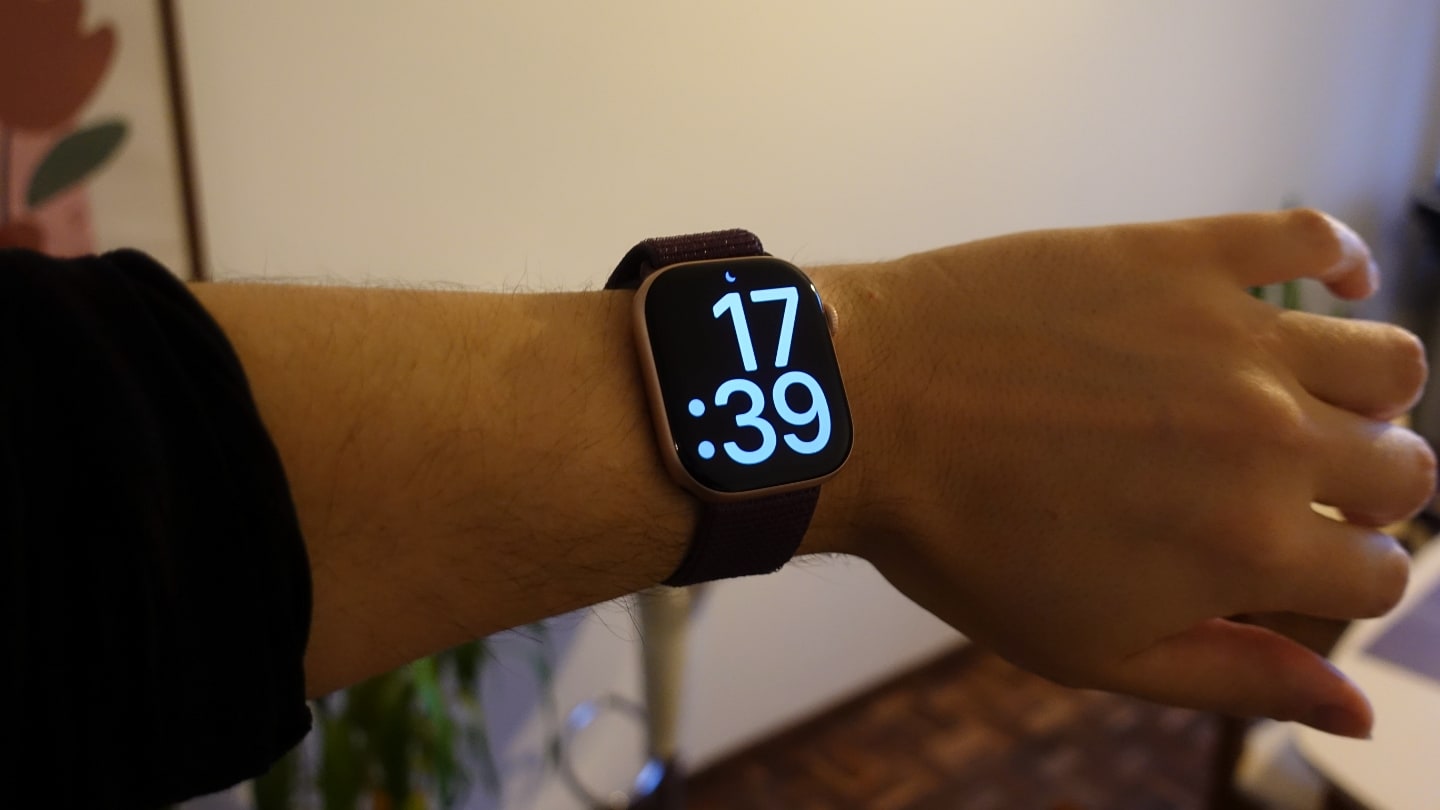
46mm case, rose gold color, white sport band. Bought. A few days later, the watch arrived at my house. With a different band — a purple sport loop. I ended up keeping it because the models with the band I’d ordered were out of stock. It was the off-season…
The soap opera reached its (possible?) final chapter — an abrupt one — on April 20th, four months after I started wearing an Apple Watch.
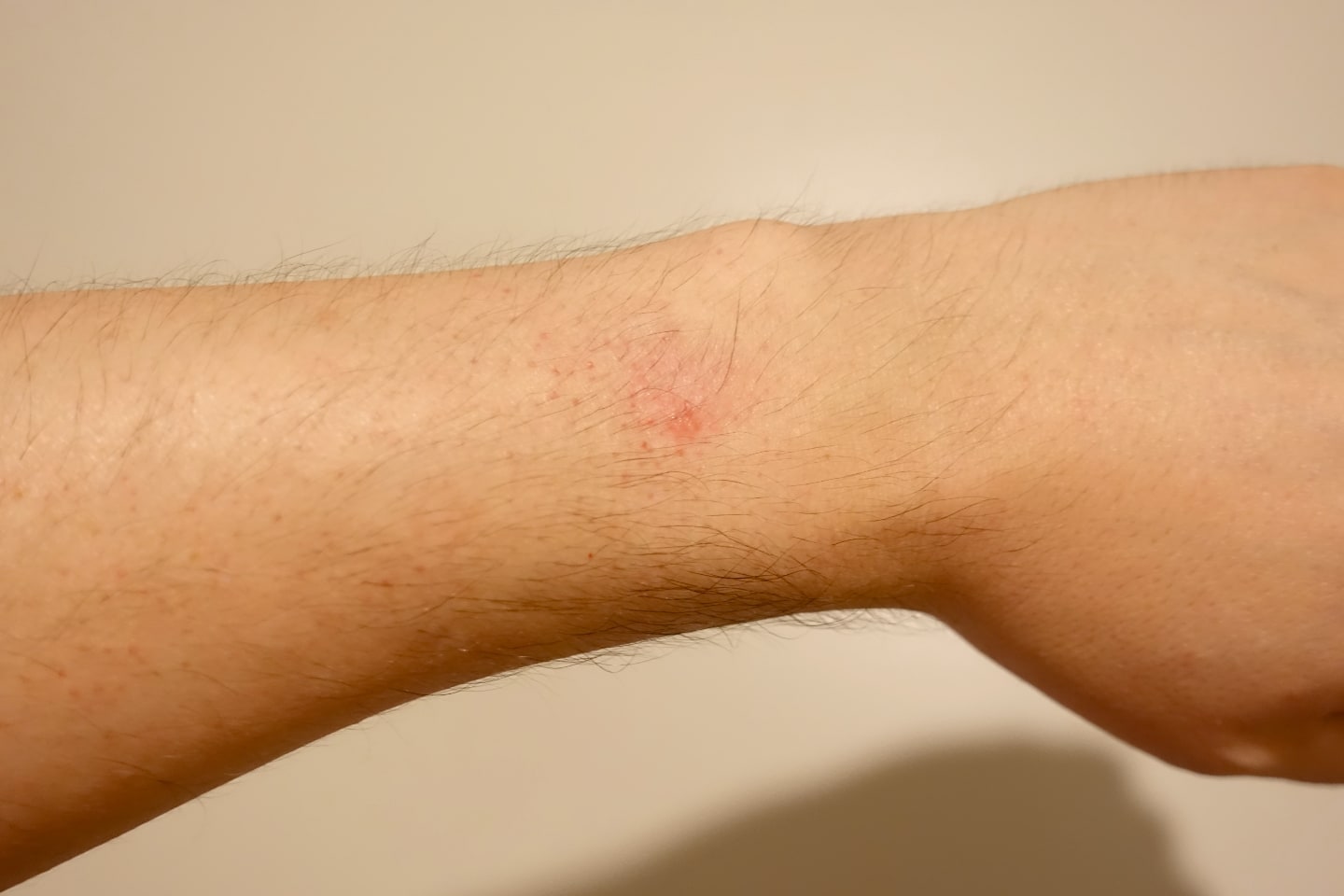
I’d been thinking for some time — probably since day one — about the benefits of the data gathered and features versus the drawbacks of having a clunky device strapped to my wrist 24 hours a day. Then, some discomfort where the watch touched my skin turned into a mild burn during a normal session of weight training and elliptical exercise. That was the last straw.
***
Before the Apple Watch, I had a fitness tracker for about two or three years. It was the Huawei Band 8 (or 9?). I thought it was great, except for the lack of a light sensor to automatically adjust the brightness. Outdoors on sunny days, I had to navigate through the menus to turn the brightness all the way up before leaving the house, or I wouldn’t be able to see what was on the screen.
That was it, and… well, it was the only notable problem. The system was a bit slow and the sync app, Huawei Health, terrible — minor issues that little devil in my ear would blow out of proportion while trying to convince me to trade it in for an Apple Watch. I resisted for years, until I finally gave in.
In most comparisons, the Apple Watch outperforms the Huawei band. I know, it’s a bit of a silly comparison to make, given that the Apple Watch costs ten times what I paid for the Huawei band.
Beyond the smoother, more beautiful software _ full of subtle animations, elegant little touches, and other details — I discovered many differences while using the Apple Watch that I really liked. From the obvious ones, like making payments by tapping it, to the less-discussed ones, like automatically unlocking my MacBook when I get close to the laptop.
Even Siri, poor Siri, has started getting used more often. Sure, I’m doing the same things I used to ask for via AirPods — setting timers, pausing the podcast or song that’s playing —, but now I’m using it more frequently, in different contexts. (For example, during breaks at the gym.)
It’s also worth noting that Apple’s commitment to high-quality materials remains in the Apple Watch: aluminum case, durable glass, super-bright OLED display, sensors protected by sapphire crystal. The Sport Loop band is comfortable to wear.
I haven’t really gotten used to the watchOS apps. Even with Apple’s latest chip for watches, everything is slower than ideal, so I often see the icon of the app I just opened in the center of the screen with a “loading…” spinner around it. Even the timer app, which I thought (and perhaps is) one of the least demanding.
Combined with the limited usefulness of the specific apps, the slowness led me to remove every app I could. On the bright side, none of them offered me any advantages (whatever they might be) over their phone versions. At the same time, in many cases, notifications (critical emails) and dynamic cards (wait time for a ride-hailing car) are already sufficient.
I liked having Apple Health’s medication reminders on my wrist — which I use to track my daily meds — and the noise level tracker, which validates my theory that the world is just too loud. As you’ve probably concluded, these are minimal benefits, almost curiosities.
***
Rereading what I’ve written so far, I’m left with the impression of a neutral review, leaning toward the negative. This aligns with my broader perception, that comes to mind when I think of the watch on my wrist.
The Apple Watch comes to mind more often than I’d like. Sometimes because of the welts (and the fateful burn) where the sensor lights hit my skin, sometimes because of its mere presence, hard to forget since it’s a large watch.
Choosing the 46mm model went against my usual pattern when buying devices with screens. Except for external monitors and TVs, I always choose the physically smaller version. This time, I let laziness get the better of me: instead of trying on both case sizes at a mall or somewhere similar, I turned to dubious online guides that suggest the (supposed) correct watch case size based on wrist circumference.
It’s big, but I think it was the right model. I imagine the 42 mm one would look comically small on me. Whatever my choice, the Apple Watch will always be bigger than my only recent reference point, the Huawei band, which never bothered me.
I think there’s room for an “Apple Band.” I’d wear it.
Another difficulty I have when putting it on is getting the strap clasp right. The Sport Loop uses Velcro, which expands the possibilities, but turns finding the ideal fit — neither too tight nor too loose — into a game of chance.
I also bought some generic silicone (or rubber) ones with holes to secure the clasp. They’re awful, and among the limited holes, I couldn’t find one that fit me comfortably.
The fact is that the Apple Watch has become a physical nuisance. It’s always making itself felt, demanding (my) attention. When I took it off my wrist on the 20th, I felt tremendous relief, which, at first, I also associated with the significant reduction in the generation and collection of biometric data. Thinking about it more a few days later, I realize the relief is entirely from not having the watch on my arm. I feel lighter, both physically and psychologically.
***
And what is all that data for, anyway? The initial excitement of having so much data available and the insights from it slowly faded away. In recent weeks, I’ve only been paying attention to the data on aerobic activity (during exercise) and sleep.
There is a fine line between using such biometric data as a reference and letting it become our master. I get the feeling that companies play dirty to keep us enslaved to the watch, with magical scores—0 to 100 for “sleep quality,” “exercise load,” “body battery.”
I asked my current dentist, who was trying to help me with my bruxism, if having one of these watches to monitor sleep stages would be useful. “Not really,” he replied. Apple itself endorses this view, with several footnotes on the official Apple Watch website warning that the health features “are not intended for medical use and should be used only for wellness purposes.” For obvious physiological reasons, sensors on the wrist will never match the precision of the multiple electrodes attached to the head during a polysomnography.

Still, it’s a good enough approximation, and the Apple Watch, in that sense, is among the best at measuring data. The nagging question — one that technology fails to answer — is: “What’s the point?”
Lest anyone say I reject modernity, I’ve rediscovered aerobic exercise thanks to real-time heart rate monitoring. This data helps me gauge intensity, which is useful for extending a session or pushing harder at specific moments. It’s hard to go back to such routines without anything on my wrist.
The lack of concrete reasons to stick to such data is what works against it.
I am a healthy man approaching 40. With just a tad more body fat than ideal, no chronic conditions (aside from migraines), and who undergoes routine checkups regularly and others whenever requested — none of which have ever shown significant abnormalities. With this profile, I can’t imagine — and I don’t think doctors can either — how all this data collected all the time would help me. And no, Apple’s aggressive marketing, as if I could die at any moment without an Apple Watch, doesn’t convince me. On the contrary, I find it repulsive.
So, once again: “What’s the point?”
***
Advertising, incidentally, has enormous power because its victims consider it harmless. Everyone agrees that it’s persuasive, but no one admits to being susceptible to a provocative commercial featuring young, healthy people running with an Apple Watch™️ on their wrist.
Well, I’ll admit it: I fell victim to advertising. To Apple, to this obsessive fitness culture, to the people who sell numbers as a synonym for health. I had to see it (and get burned) for myself to realize I’d fallen for a major scam.
***
Since April 20th, I’ve been using the Apple Watch only for exercise and sleep tracking. In recent days, I’ve left it on the charger before going to bed.
Apple Health, the app that aggregates data from the Apple Watch, recently flagged “changes in health trends”, like a sharp drop in calorie burn from an average of 451 per day to 83.
It’s obvious there’s been a drop. After all, I’m not wearing the watch. Apple Health knows this because the watch works by connecting to my phone and Apple’s cloud, and yet it still thought it best to alert me to this concerning discovery as if I weren’t capable of noticing it myself.
I find these notifications amusing. First, because of the ridiculousness of the situation. Second — and more importantly — because, even unintentionally, they make it clear that that truckload of numbers is a representation of the watch based on what it can capture from me, and not from my body. There’s an important difference there. My body continued to burn the same amount of calories as when I had the Apple Watch on my wrist. Maybe even more, or less… I didn’t even get into that, but how can I know if such data is reliable?
Given these conclusions, I now wonder if it’s worth keeping this expensive smart accessory just to use it two or three times a week, for periods of no more than an hour. It almost sounds like a rhetorical question, but it isn’t, because there’s an alternative: passing the Apple Watch on to someone who’ll make better use of it and going back to the cheap Huawei wristband for specific moments, when I want to know my heart rate in real time. Does anyone know which version it is?