Brazilian Internet Forum (FIB16) in Belém, Pará: A visual tour
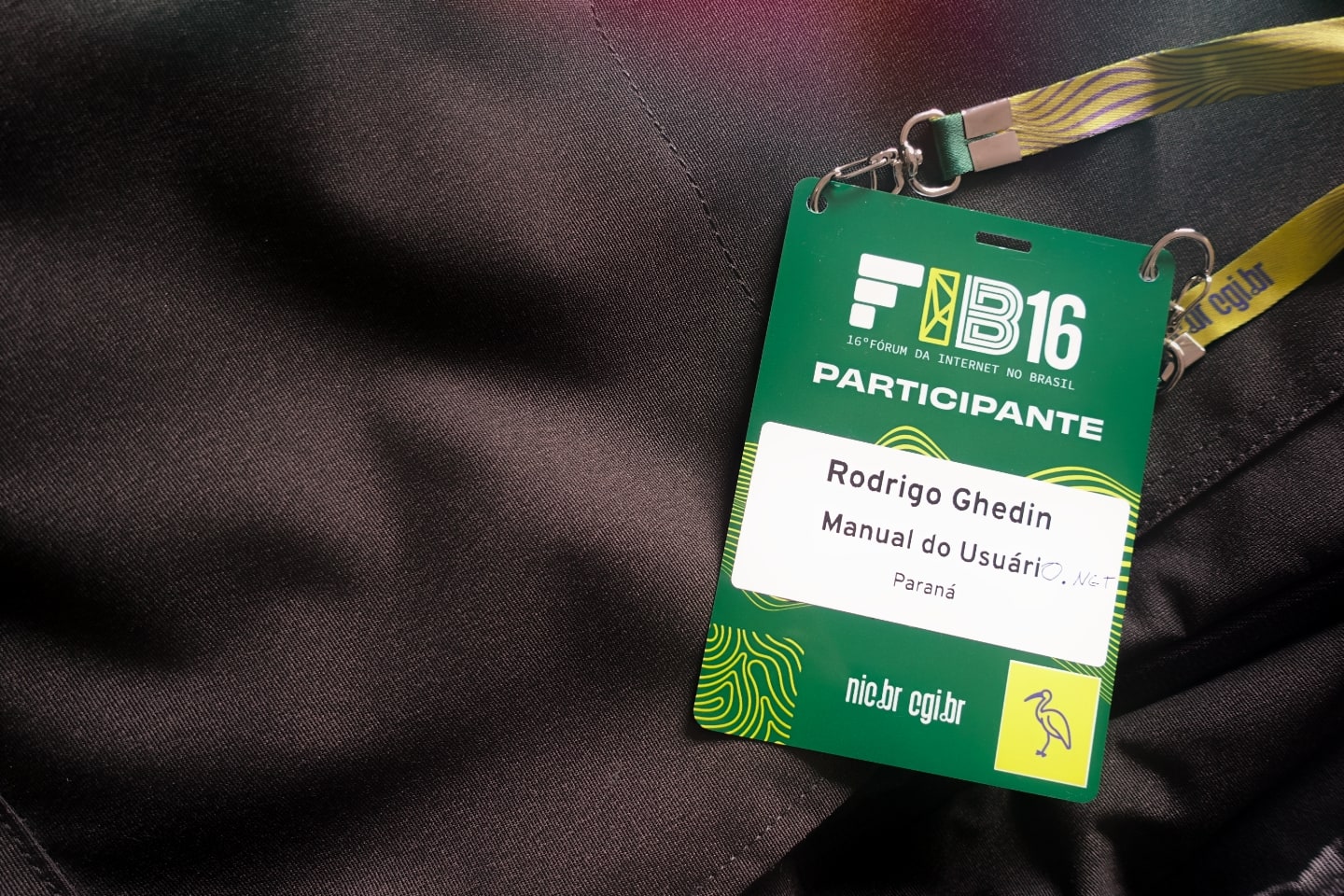
I had the opportunity to participate in yet another edition of the Internet Forum in Brazil (FIB16), this time in the Amazon forest region, in Belém, Pará. The event, organized by NIC.br, brings together people from different sectors to debate hot and/or important topics related to the internet in the country.
My FIB16, however, was a bit different. Like the previous edition in Salvador, Bahia, I came here hired by NIC.br to host the interview podcast Nós da Internet. I opted to stay for fewer days this time, which packed my interview schedule and kept me from attending the panel discussions. (A tip that’s useful for me: all of them were streamed and are available on YouTube.)
To not miss out on covering the event for this Manual, I thought I’d document the venues and moments of FIB16 and the behind-the-scenes of Nós da Internet in photos. Also, a few more pictures of Belém and its touristic spots.
It had been a long time (really long) since I’d photographed anything other than family events. Ignore the weird angles, blown-out lights, and strange colors. I noticed I’d forgotten everything I ever knew about photography — which, to be honest, was never much to begin with.
***
FIB16 is still happening at the Hangar convention center, in the capital of Pará, the same venue that hosted COP 30 in 2025. It’s massive. FIB occupies part of the upper floor.
When you pass through check-in on the ground floor and climb the stairs (or get swept along by the escalator), you’re met with a very wide “U”-shaped corridor that houses the four rooms where the debates happen, private rooms, the Nós da Internet studio, bathrooms, and probably more things I didn’t notice.
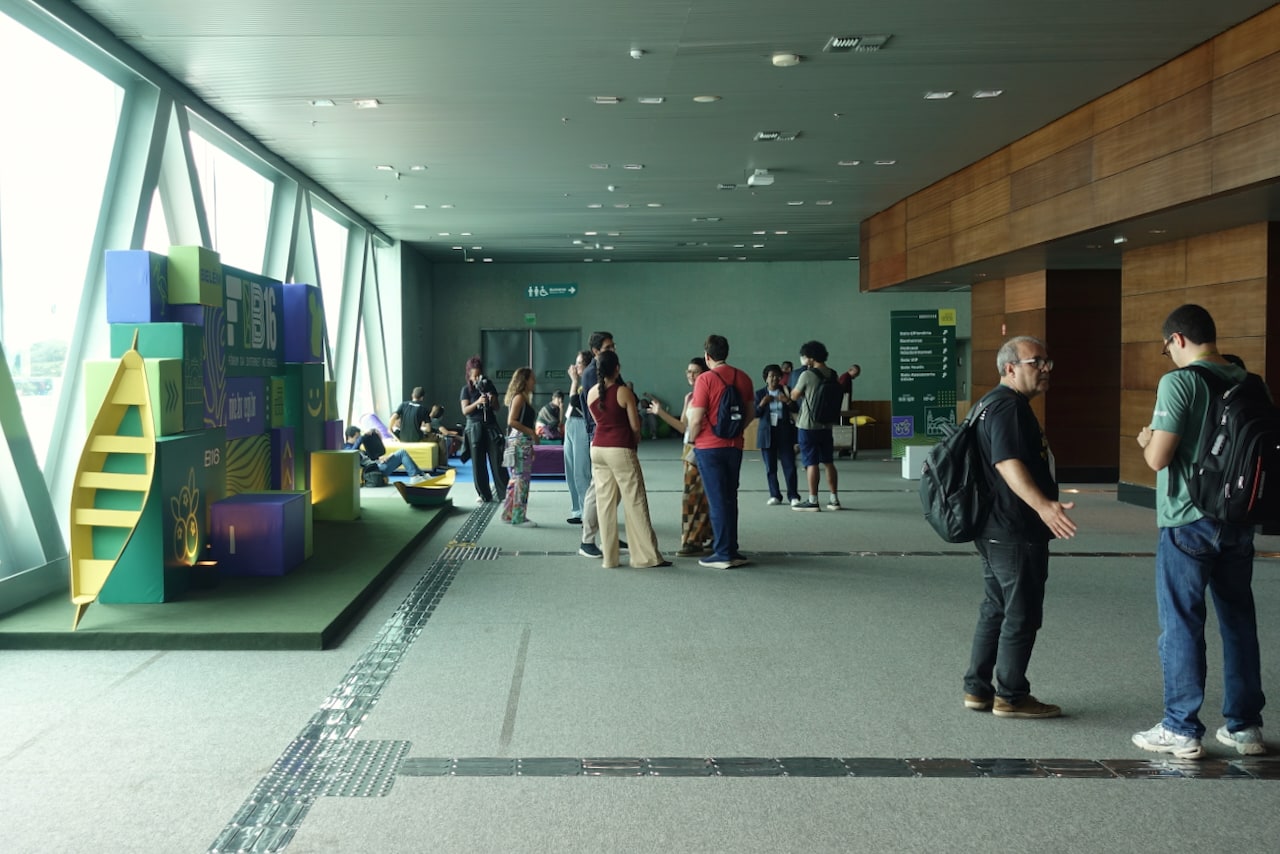
The corridor is so wide that it received two spaces with armchairs and seating for FIB participants to rest or use their computers more comfortably. It was also a place conducive to meeting (and reconnecting with) people, and in this edition I was lucky to meet a bunch of cool folks I’d only talked to by phone, email, or social media.
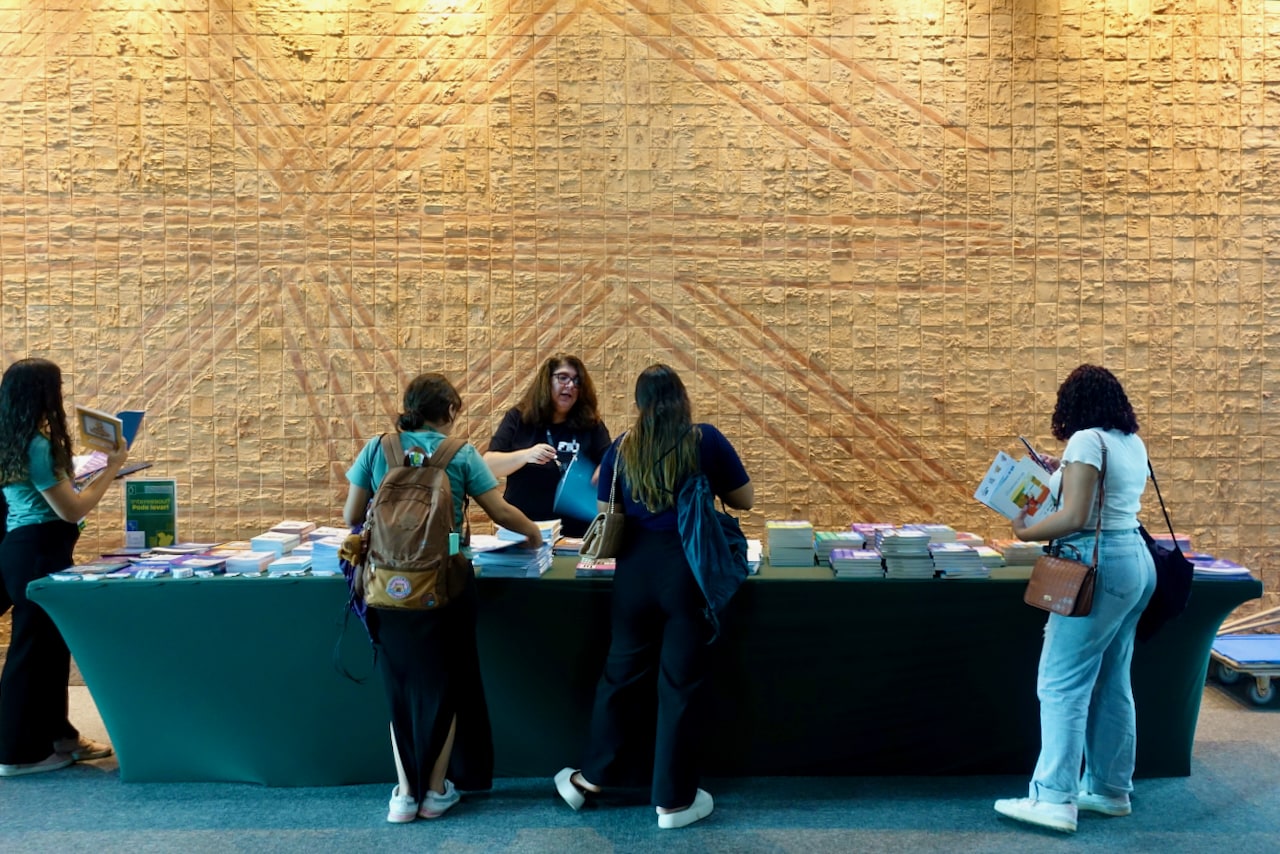
On the right side they placed a large table, traditional at FIB, with books, pamphlets, and stickers from NIC.br and partners, all offered for free.
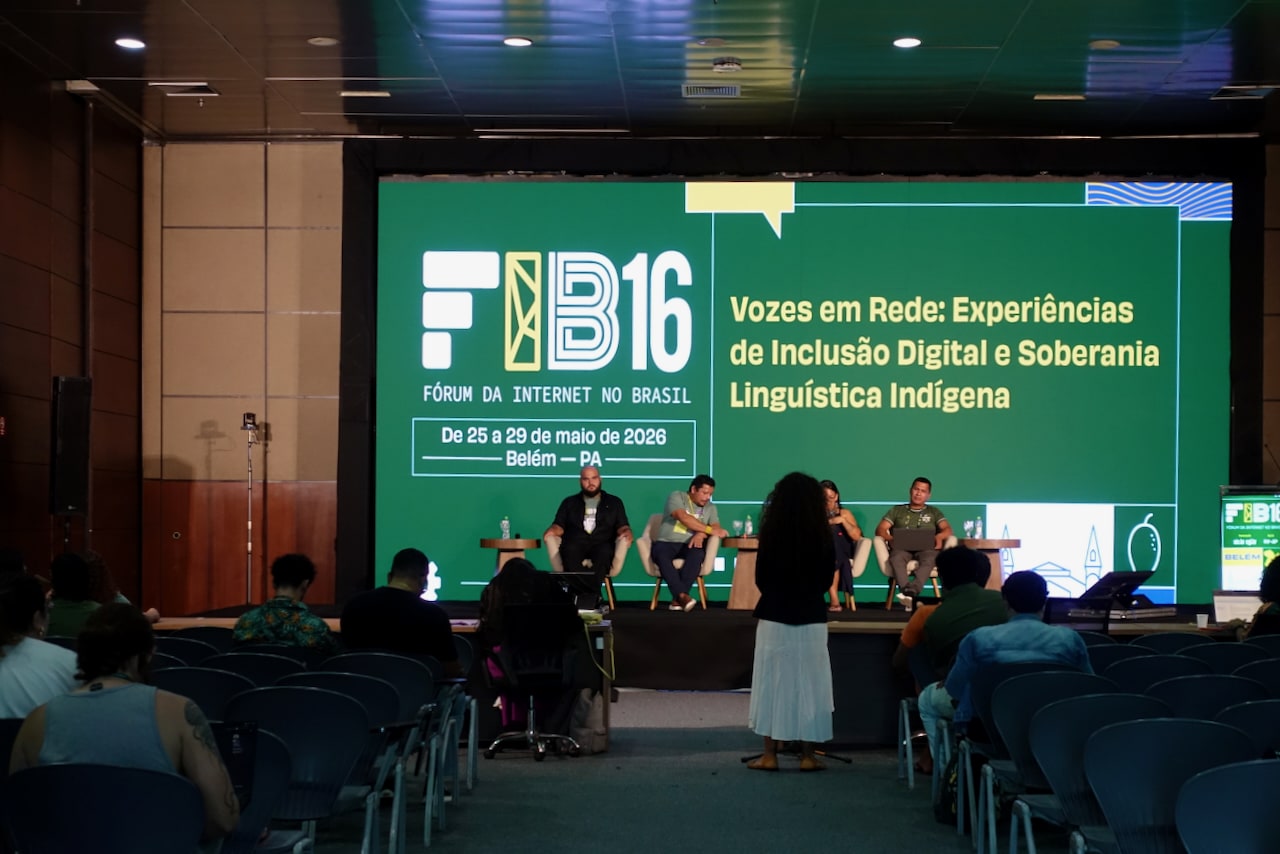
Three rooms are on the right and one — the main (and largest) — on the left. The rooms are organized in an auditorium format, with the stage in front of a huge screen.
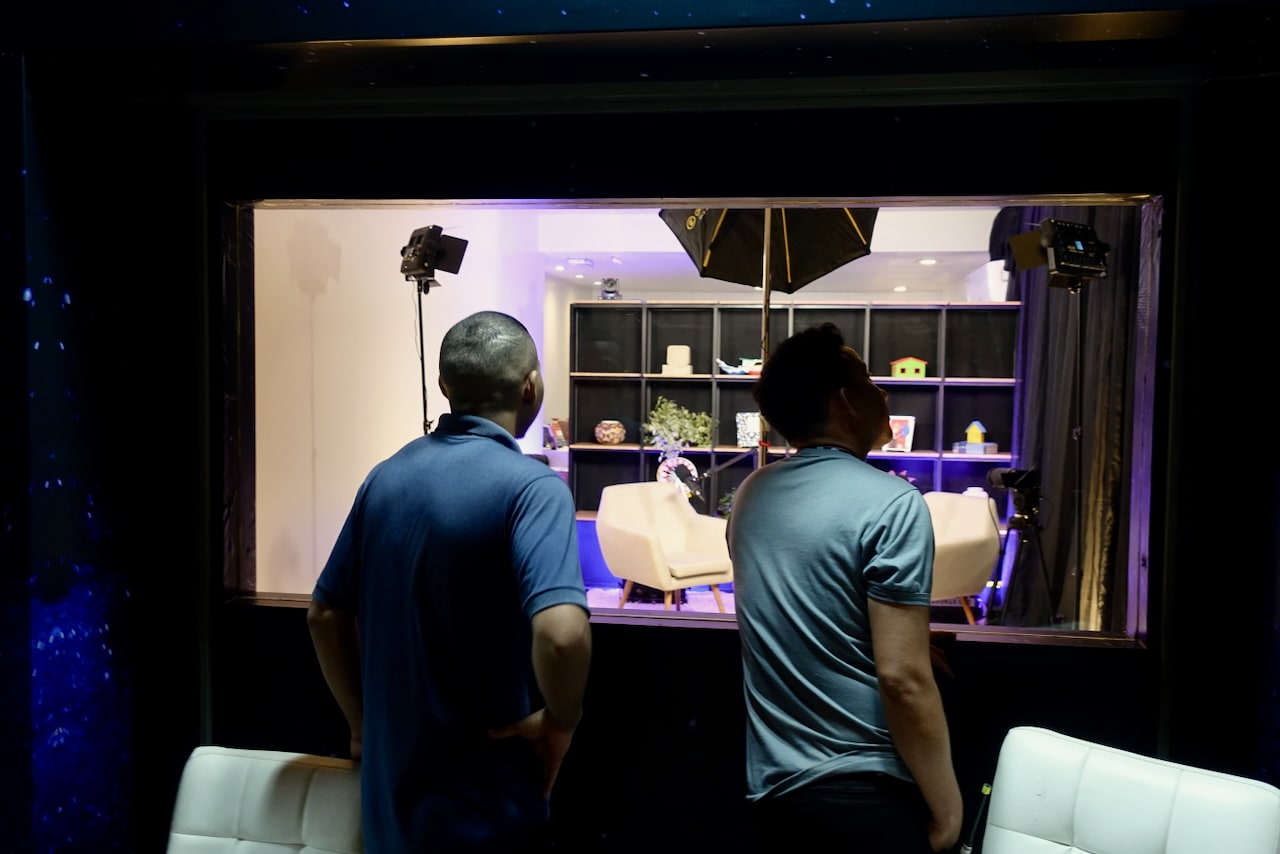
The Nós da Internet studio is on the left side, kind of tucked away. (In Salvador, it was more centrally located.) However, the production leveed the decoration up. It turned out super cozy, and I was grateful they skipped the headphones for me and the guests.
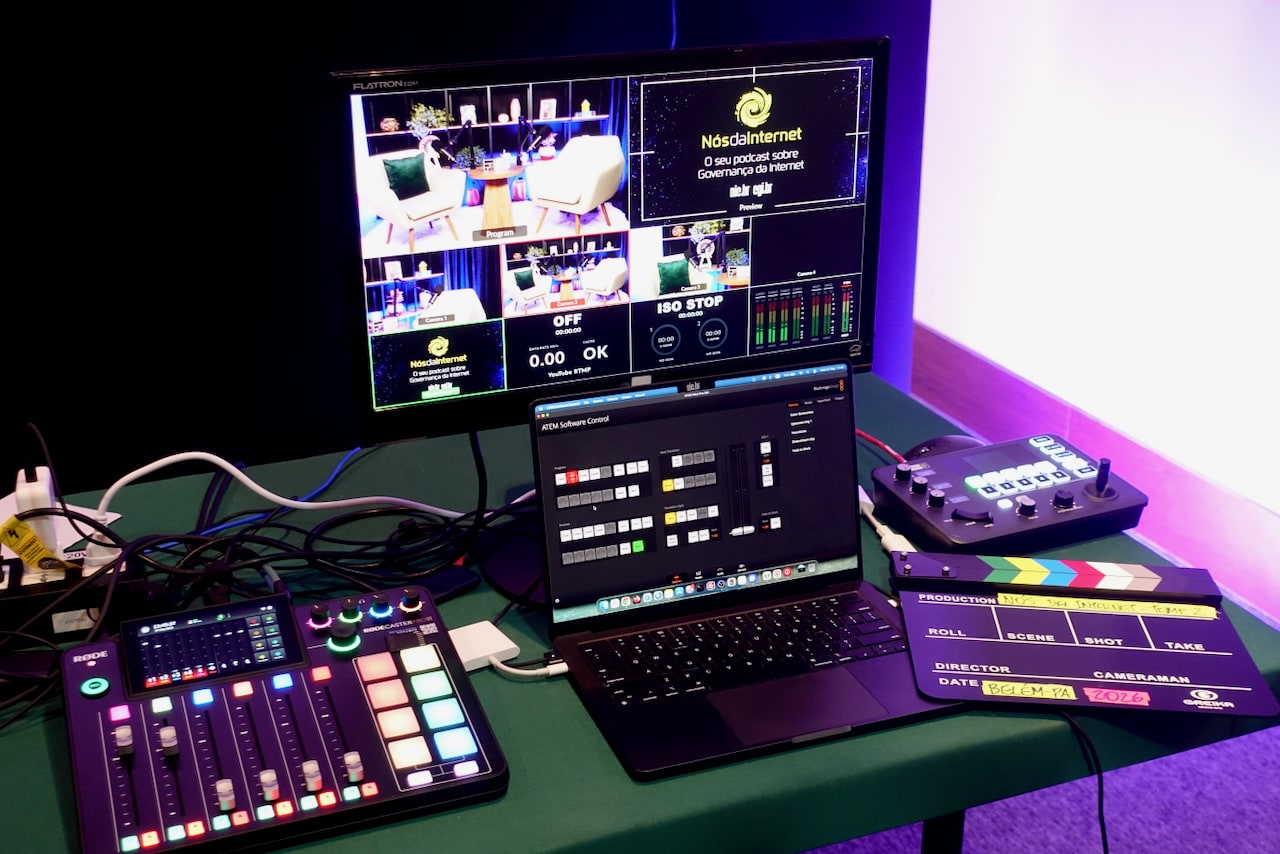
The editing (or capture) station is behind the studio. It’s full of colorful buttons and professional audio equipment. I have absolutely no idea how any of that works.
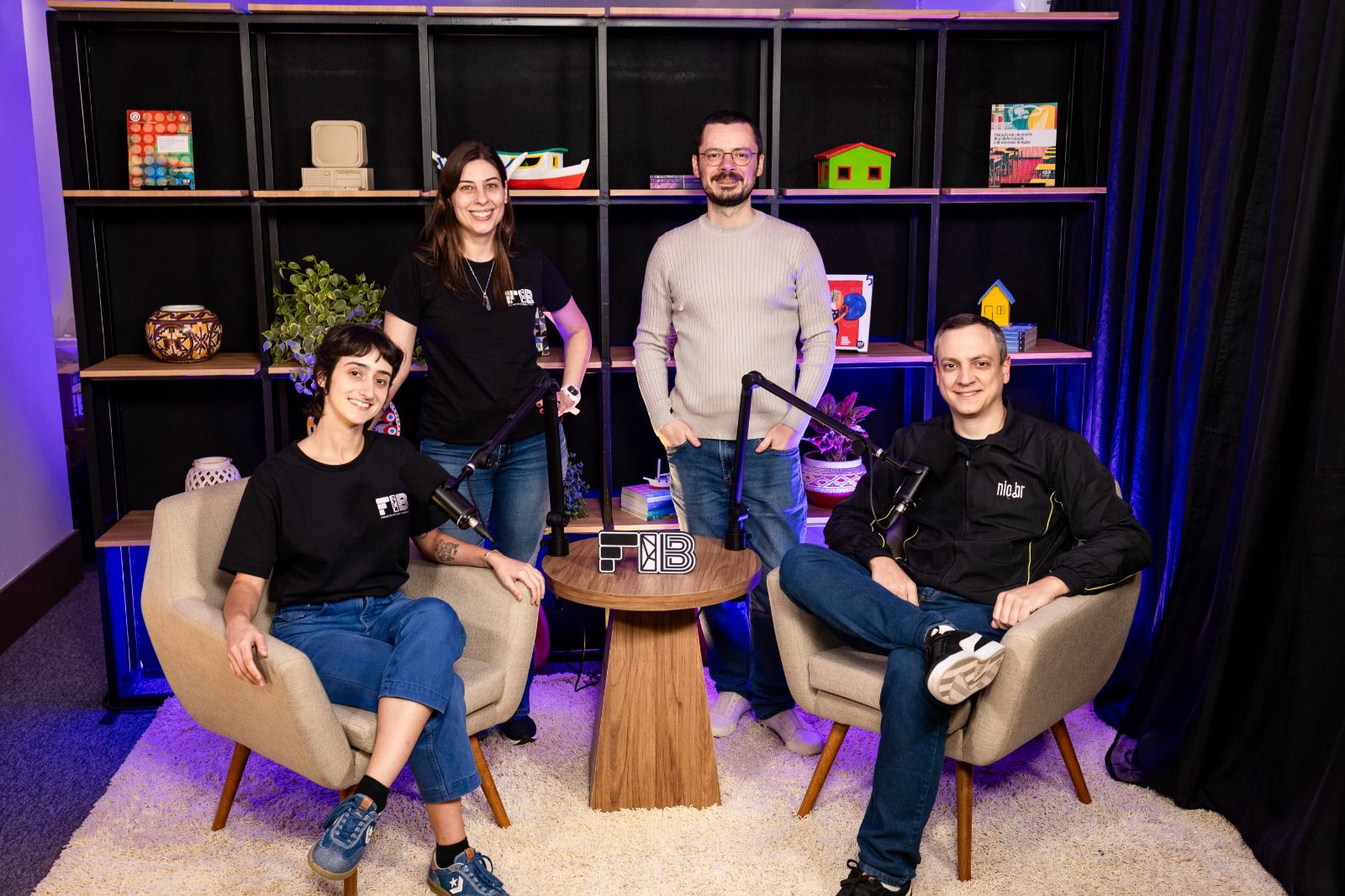
The awesome team producing the second season of Nós da Internet:
***
Being only half-silly, not all the way, I took advantage of the evenings and gaps between recordings to explore Belém. It was the first time I’d been to Brazil’s North region.
I went to Estação das Docas, which looks like a dock/port on Guajará Bay, except redesigned for tourists. Inside it’s like a mall restricted to restaurants and souvenir shops. The outdoor area keeps the cranes, which I’m not sure are still used or have just become decoration.
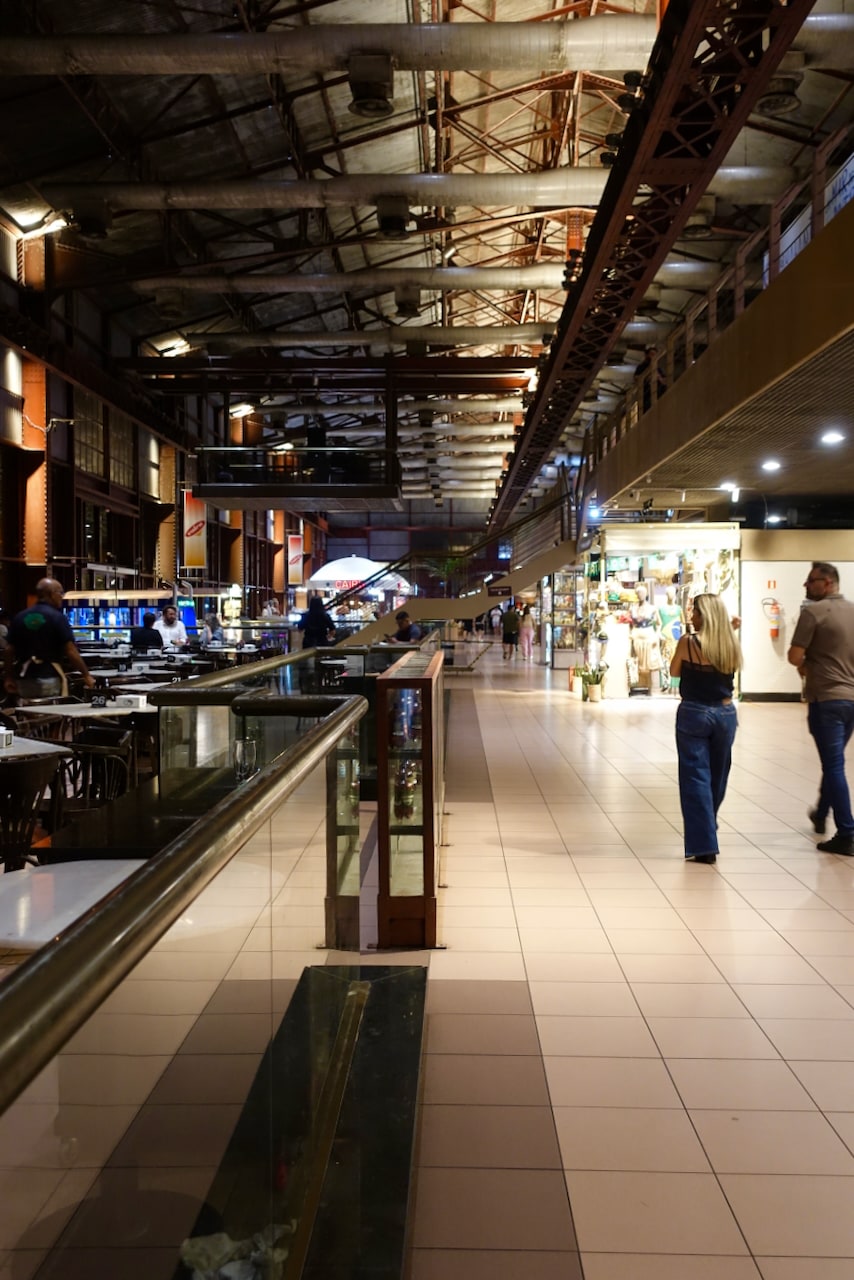
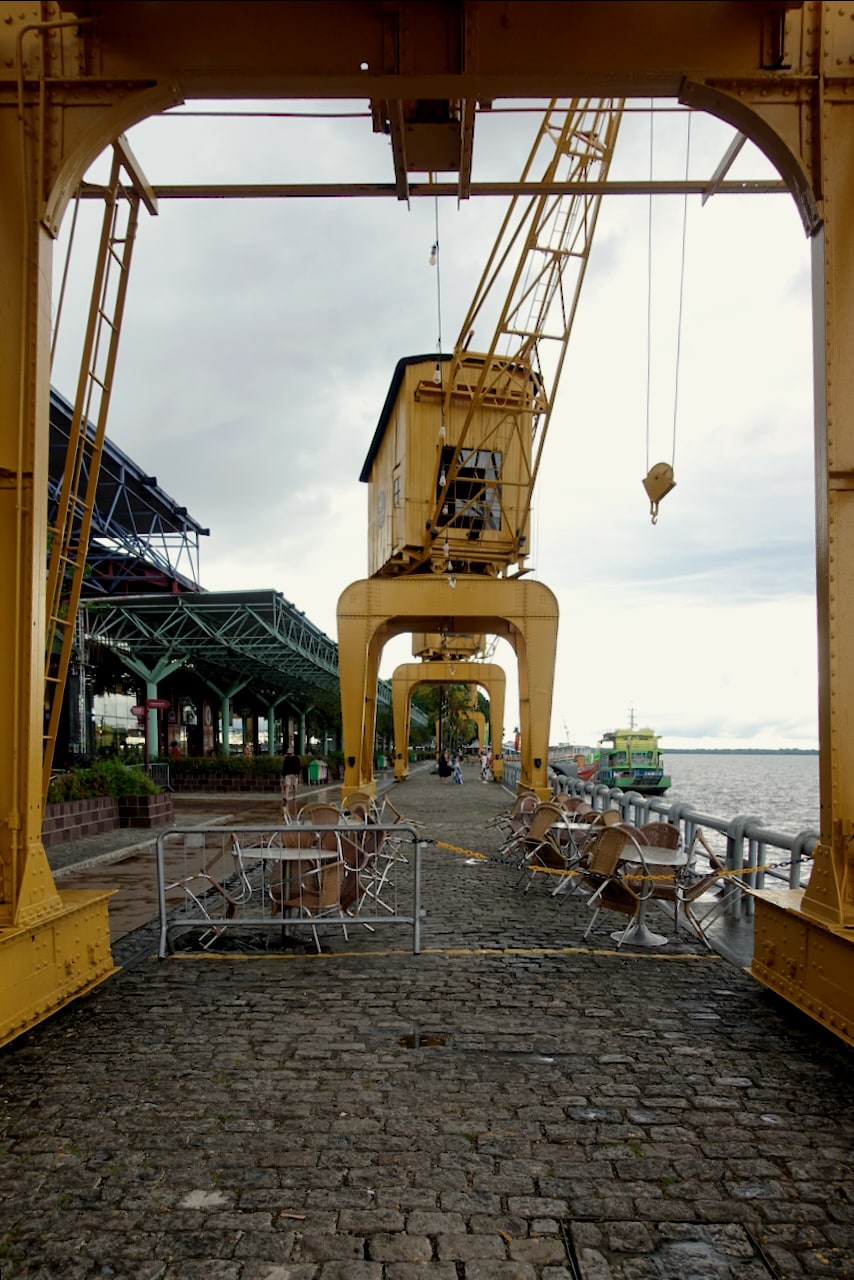
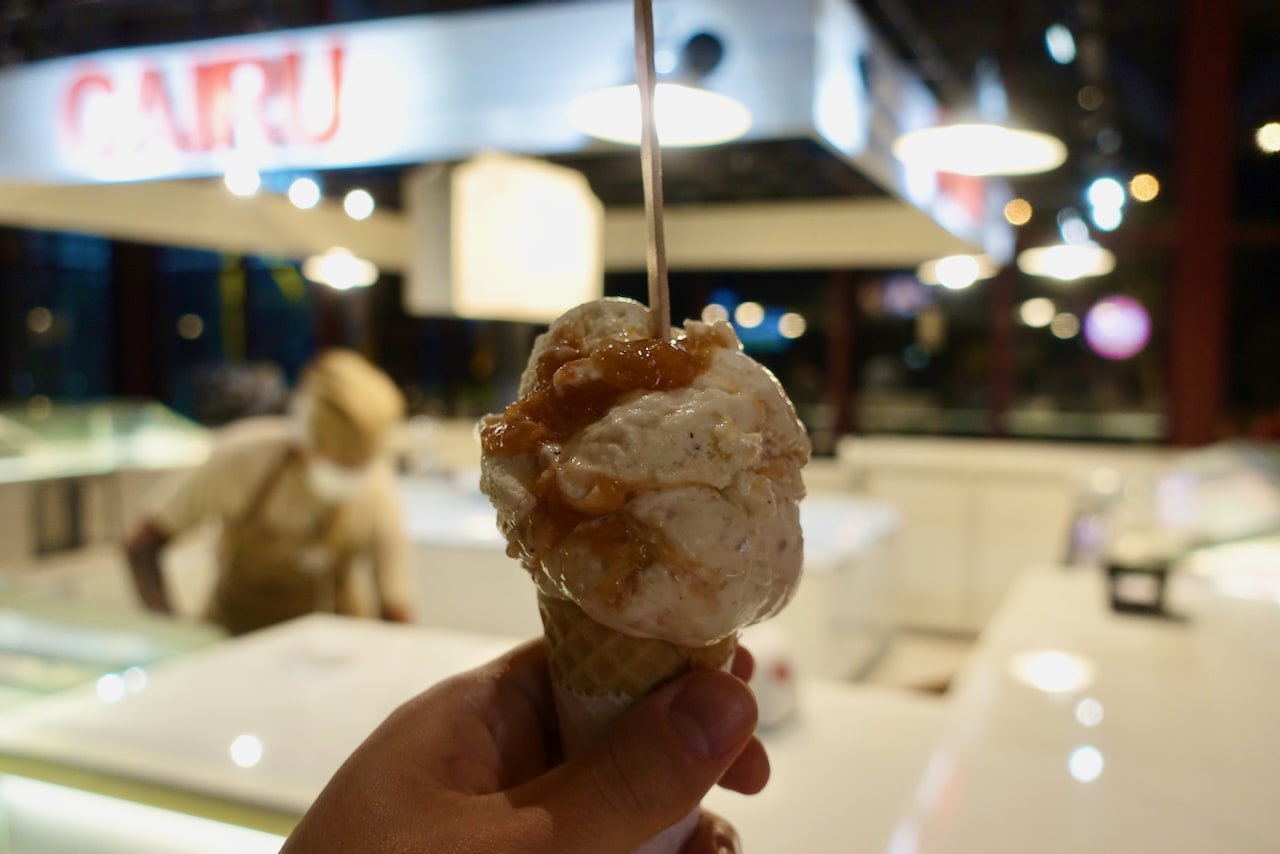
There, I had an incredibly good ice cream at Cairu: the “carimbó” flavor, which mixes cupuaçu with Brazil nuts, and the Cairu COP 30, which has the same ingredients plus pistachio.
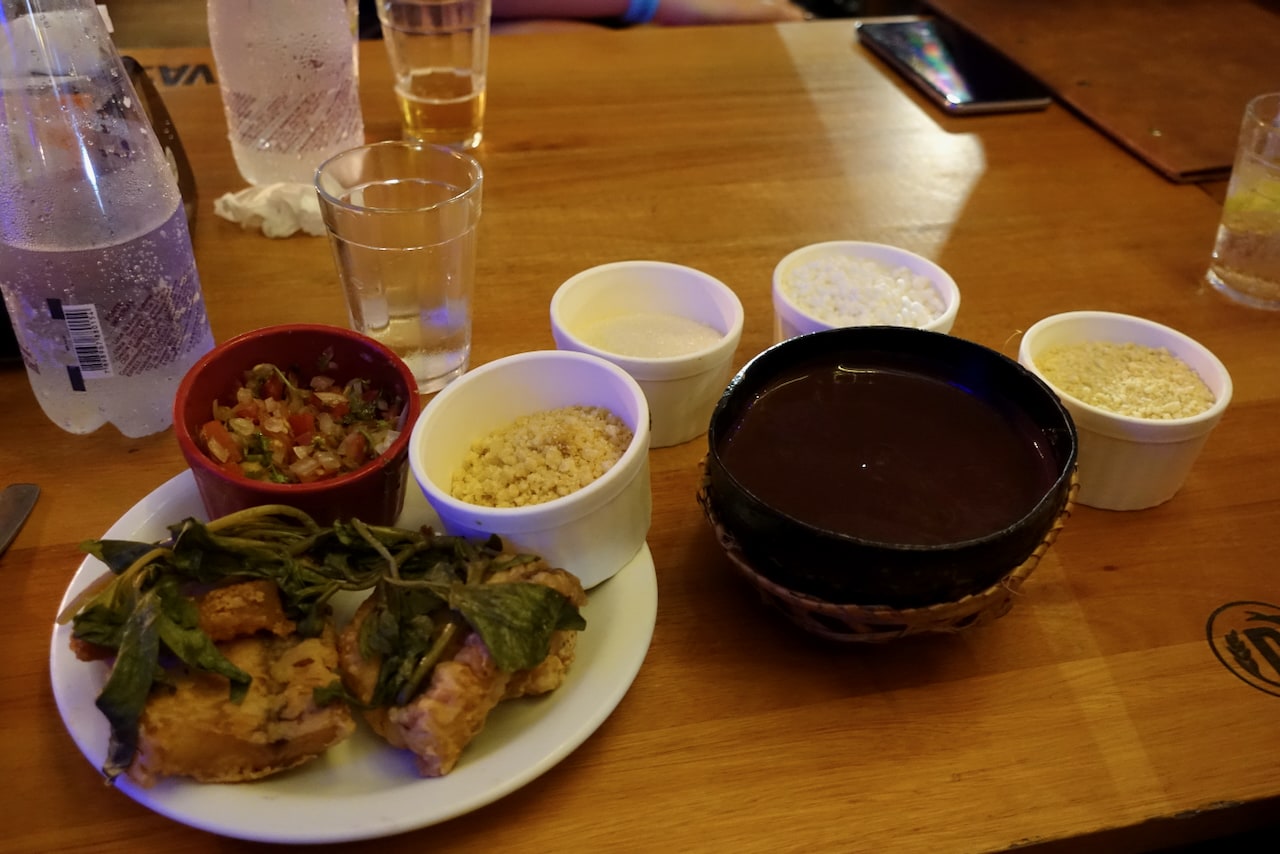
Speaking of carimbó, the musical rhythm of Pará, the next night we went to Apoena, a bar-restaurant that appears to be a traditional spot. I ate the popular filhote fish with açaí served in a gourd, which I found delicious:
And afterward, I watched the beginning of Lucas Castanha’s performance and the show put on by customers who got up from their tables to dance.
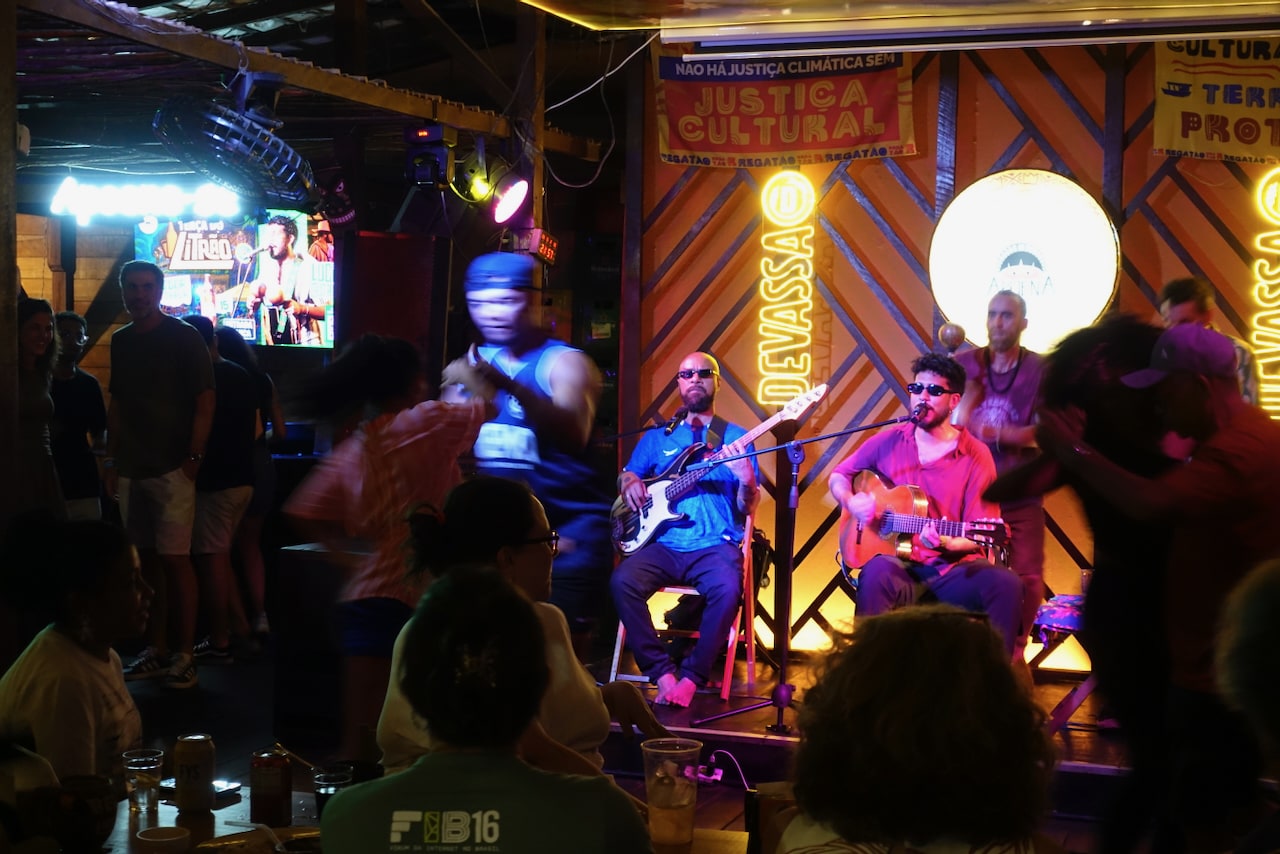
I also ate — without photos — tacacá, tucupi à casaca, moqueca with filhote fish, and maniçoba (the dish I enjoyed most). I discovered new fruits, like pupunha (from the same tree that produces hearts of palm), bacuri (a cupuaçu without the slight tartness at the end), and jambu leaves, omnipresent in Pará’s cuisine and which until then I’d only known dissolved in cachaça. The equivalent in sweets is cupuaçu, which appears in many recipes and really appeals to me.
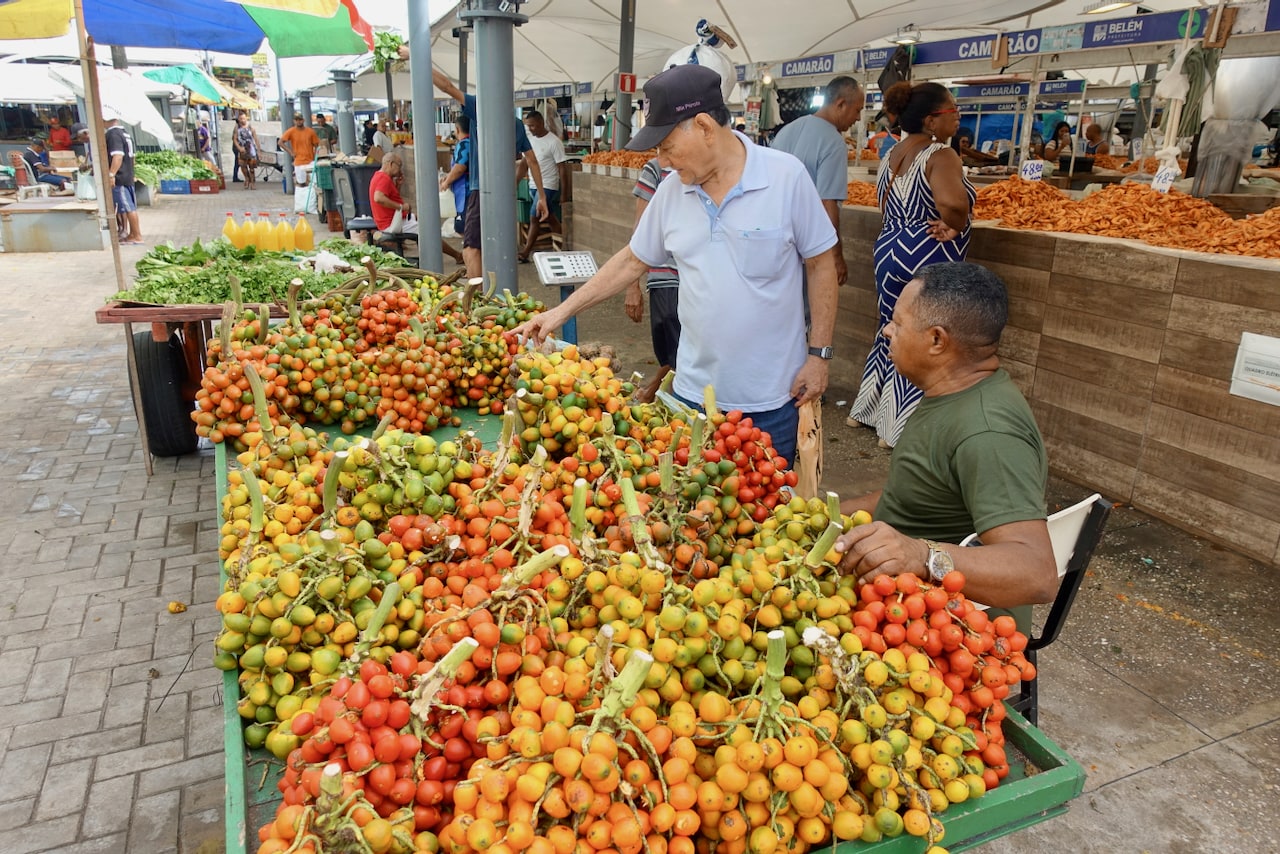
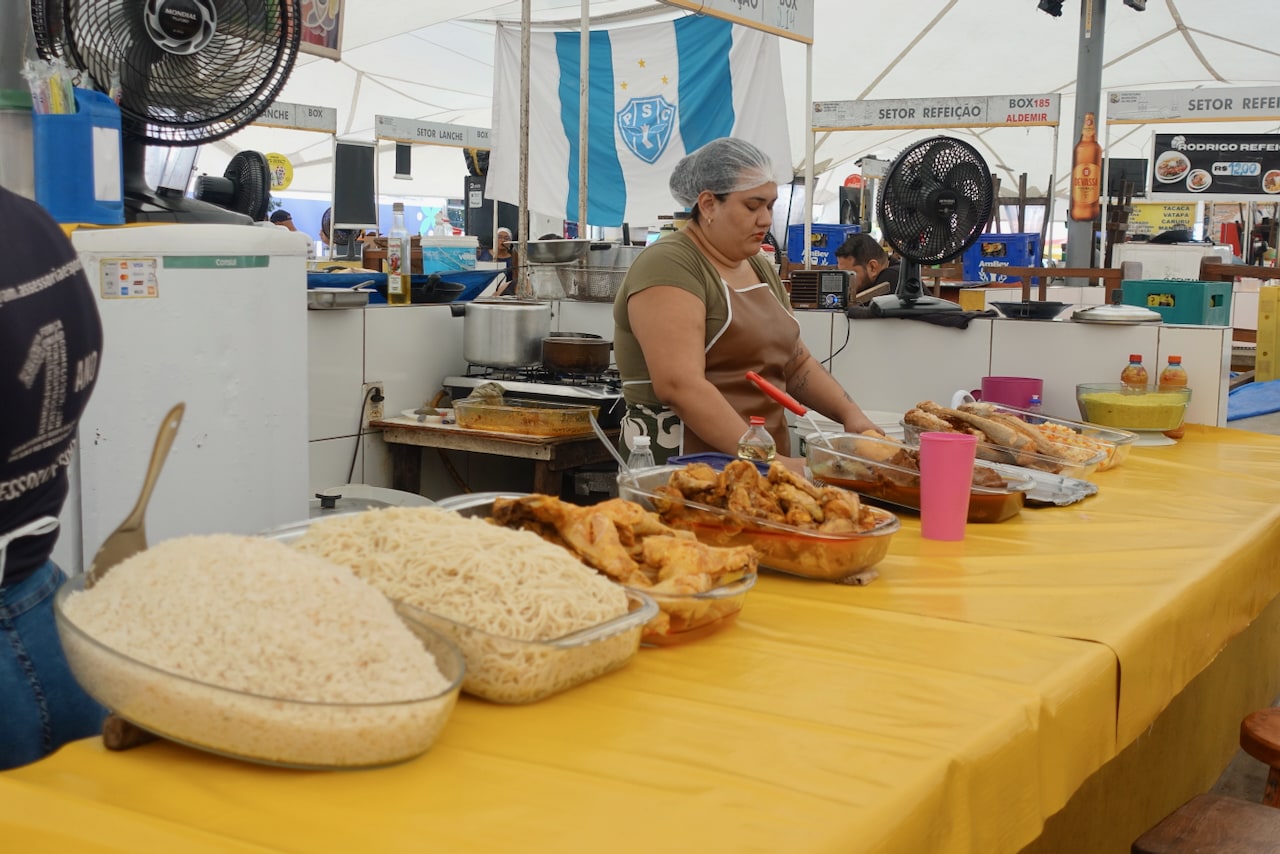
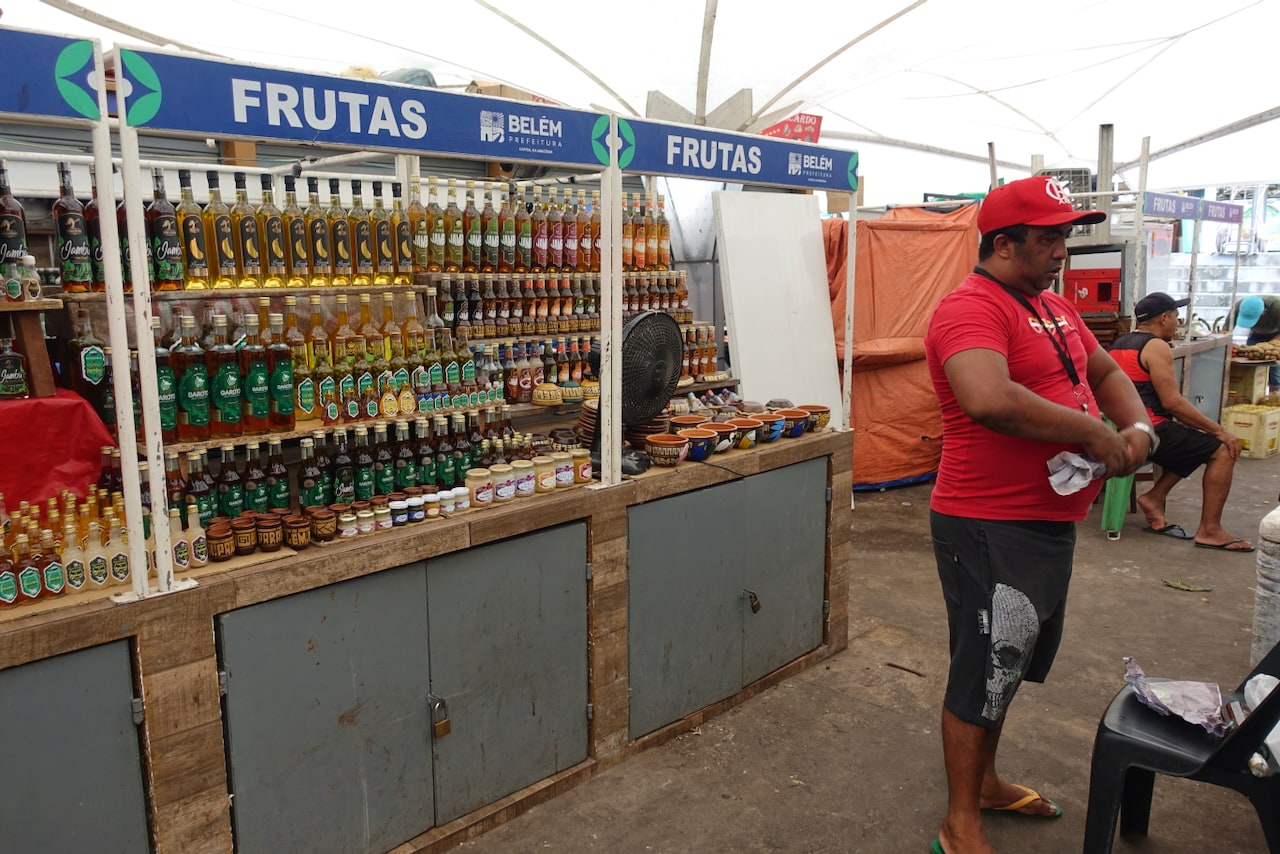
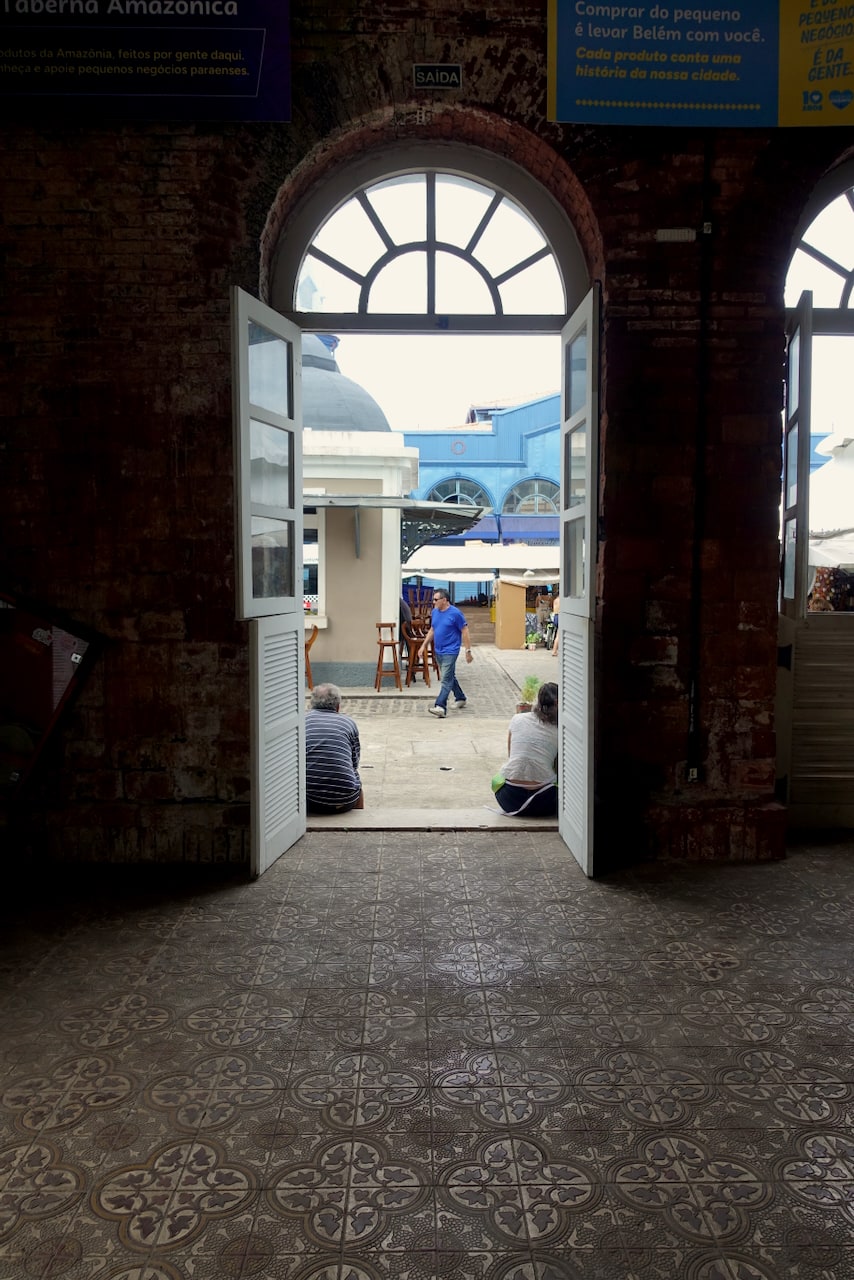
On my departure day, I stopped by the Ver-o-peso market to buy some souvenirs. It’s vast and chaotic. The stalls form thematic mazes — fish area, fruit area, handicrafts — that flood your senses with distinct smells, colors, and sounds.
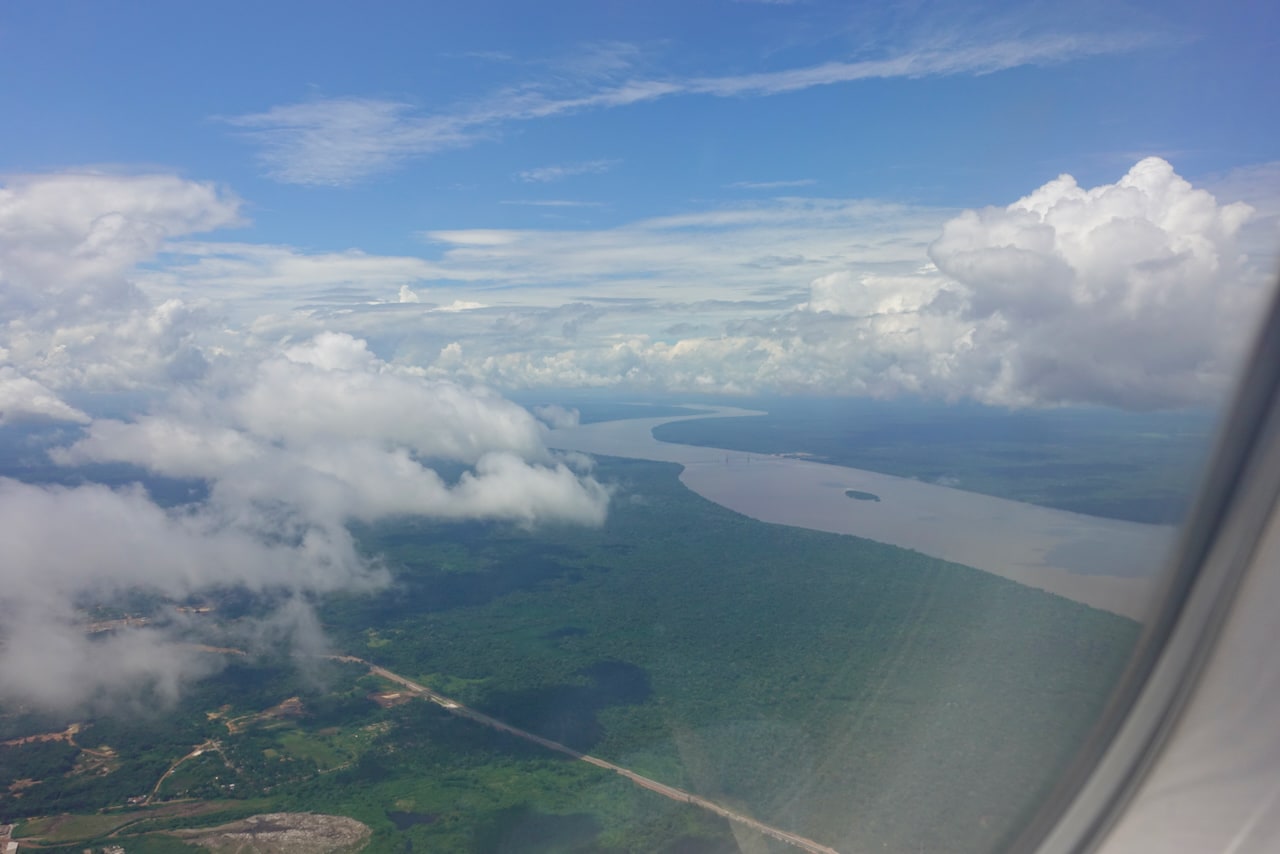
On my first flight home, from Belém to Guarulhos (GRU), I managed to snag a window seat hoping to see a chunk of the Amazon from above. I did, but not much: there were lots of clouds in the way and fewer trees than I expected.