
I almost got hit by a car
In early June, while visiting my parents in a small town in the interior of Brazil, I decided to skip the gym and make a quick run to the pharmacy — the first signs of a migraine had set in, and that’s the best time to take something before it gets worse.
The nearest pharmacy is about 1,5 km (a mile) away. I laced up my running shoes to make it worth the trip: a light walk to pick up the medicine.
On the way back, I decided to change my route and loop through a small square where, when I used to live there, I’d often go for walks.
Almost back at my parents’ house, I crossed a busy avenue without incident. On the other side, I had a momentary lapse and assumed the cross street was one-way. (It actually is — but only on the other side of the avenue.)
I looked one way, saw no cars or motorcycles, and stepped out.
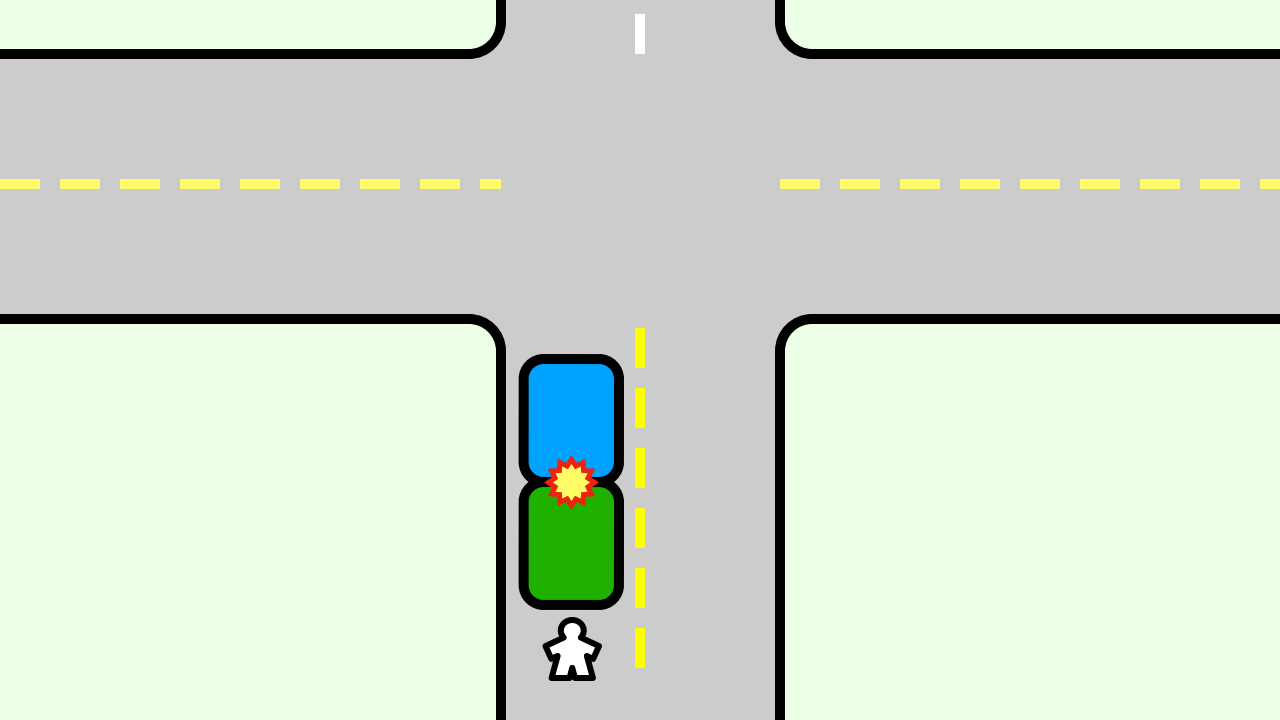
Halfway across, I heard a loud crash. I looked the other way and saw a small pickup truck less than a meter (three feet) from me. I came within inches of being hit. The crash came from the car behind the small truck — it had rear-ended it, and the front end was wrecked because the car that had braked was towing a trailer hitch.
The whole thing was so surreal that it took me a few seconds to register what had just happened. (More on that later.) When I heard the crash and turned around, it felt like it had happened somewhere far away. It wasn’t until I’d reached the other side of the street that it really hit me.
Pure carelessness on my part, yes — but made worse by a piece of technology: my headphones. I had active noise cancellation on and, on top of that, I was listening to music. The only reason I heard the crash at all is that the sound of a collision is just that loud.
My sensitivity to noise is well known to regular readers of this blog. That’s why active noise cancellation in headphones like the AirPods Pro was a revelation. Suddenly, I could walk down the street without getting battered by the roar of traffic.
Too much of a good thing, though. If I hadn’t muffled one of the two senses you rely on most in traffic, I might have heard the cars coming down the lane I’d convinced myself didn’t exist. I might have prevented the crash — and my own near-miss.
This is conventional wisdom, and it’s backed by science — though, to my surprise, the handful of studies I found are all at least a decade old. (Lichenstein et al., 2012, IAG/DGUV, 2012, Mwakalonge et al., 2015. If you know of a more recent study, let me know!)
Wearing headphones in traffic creates two problems: they suppress the sound of vehicles, and they pull your attention inward — toward the music or podcast — and away from your surroundings.
In a press release, Dekra — a German company and global leader in vehicle inspection and certification — shared some updated findings. Among them: noise-cancelling headphones are “especially dangerous” because even at low volume, they slow a pedestrian’s reaction time. My own reaction was delayed enough that I noticed it myself.
The release also flags the growing risk posed to inattentive pedestrians by electric cars, electric motorcycles, and cyclists — all quieter road users that are becoming increasingly common.
People tend to dismiss safety advice they instinctively feel is overblown. I think that was me, when it came to wearing headphones outside.
Hours after the scare, I caught myself thinking about the chaos that getting hit would have caused. Hospital, worried family, possible surgery, a long recovery, maybe lasting damage. It’s easy to forget how fragile life is.
Since the incident, I’ve swapped my headphones for a passive noise reducer, the Loop Engage. It cuts sound by just 16 decibels — enough to take the edge off loud engines and heavy vehicles without cutting me off from the world around me.
While Apple doesn’t publish this figure, experts estimate that the AirPods Pro 2 — the model I was wearing that near-fateful day — reduce sound by 27 dB. Worth keeping in mind that the decibel scale is logarithmic, not linear, so an 11 dB difference is far greater than it sounds on paper.